

outsourced teams can shift timelines and ownership just as easily as they deliver. here's how to spot the difference between teams that stay accountable and those that disappear when friction arrives.
How Do You Know If an Outsourced Development Team Is Actually Accountable
Most founders find out the answer to this question the same way. They miss a deadline. They get a deliverable that technically works but does not solve the problem it was built to solve. They try to enforce something in the contract and discover that the contract does not say what they thought it said.
Accountability in outsourced software delivery is not invisible. It has a structure. That structure is either built into the engagement before work starts or it is absent and its absence is what produces the outcomes most founders attribute to bad vendors, bad luck, or bad timing.
This article makes accountability operationally concrete. Not as a value a vendor claims to have. As a set of specific, verifiable structures that either exist in your engagement or do not.
Why "We Take Accountability Seriously" Means Nothing
Every outsourced development team claims accountability. It appears in every proposal, every sales deck, every intro call. It is the word contractors use when they mean "we are professional" — which tells you nothing about what happens when a milestone slips, a deliverable misses the mark, or the engagement ends and the code does not work the way it was supposed to.
Accountability is not a value. It is a mechanism. And mechanisms are either present in the contract, the milestone structure, the acceptance criteria, and the payment terms or they are not.
Between 20 and 25% of outsourcing relationships fail within their first two years, with poor expectation management cited as the leading factor. The pattern almost always starts the same way: a vendor who was not used to being held to clear accountability, and a client who did not build the structures that would have made that holding possible.
The question is not whether your vendor takes accountability seriously. The question is whether your engagement is structured to make accountability unavoidable.
The Four Structures That Make Accountability Real
Accountability in outsourced software delivery is not one thing. It is four things operating together. Remove any one of them and the others stop working.
1. Milestone structure
A milestone is not a deadline. A deadline is a date. A milestone is a specific, verifiable output tied to a date, something both parties can look at and agree has either been delivered or has not.
"Complete backend API" is not a milestone. "Backend API returns authenticated user data in under 200ms, passes all specified test cases, and is documented in the agreed format by Friday" is a milestone.
The difference between those two statements is the difference between an engagement where accountability is possible and one where every dispute becomes a negotiation about what was originally meant.
Every milestone in a well-structured engagement should specify the output, the acceptance criteria, the format of delivery, and the review window within which the client accepts or raises issues. If a vendor cannot produce milestones at that level of specificity before work starts, the engagement is not structured for accountability. It is structured for ambiguity and ambiguity always resolves in the vendor's favour.
2. Acceptance criteria
Defining what "done" means is the single most important conversation in any outsourced engagement. It almost never happens explicitly.
Acceptance criteria answer the question: what does the client need to see, test, or verify in order to accept this deliverable as complete? They cover performance standards, testing requirements, documentation requirements, and the specific conditions under which the client can reject the work and require remediation.
Without acceptance criteria, "done" is whatever the vendor says it is. With acceptance criteria, "done" is a verifiable state both parties agreed on before a line of code was written.
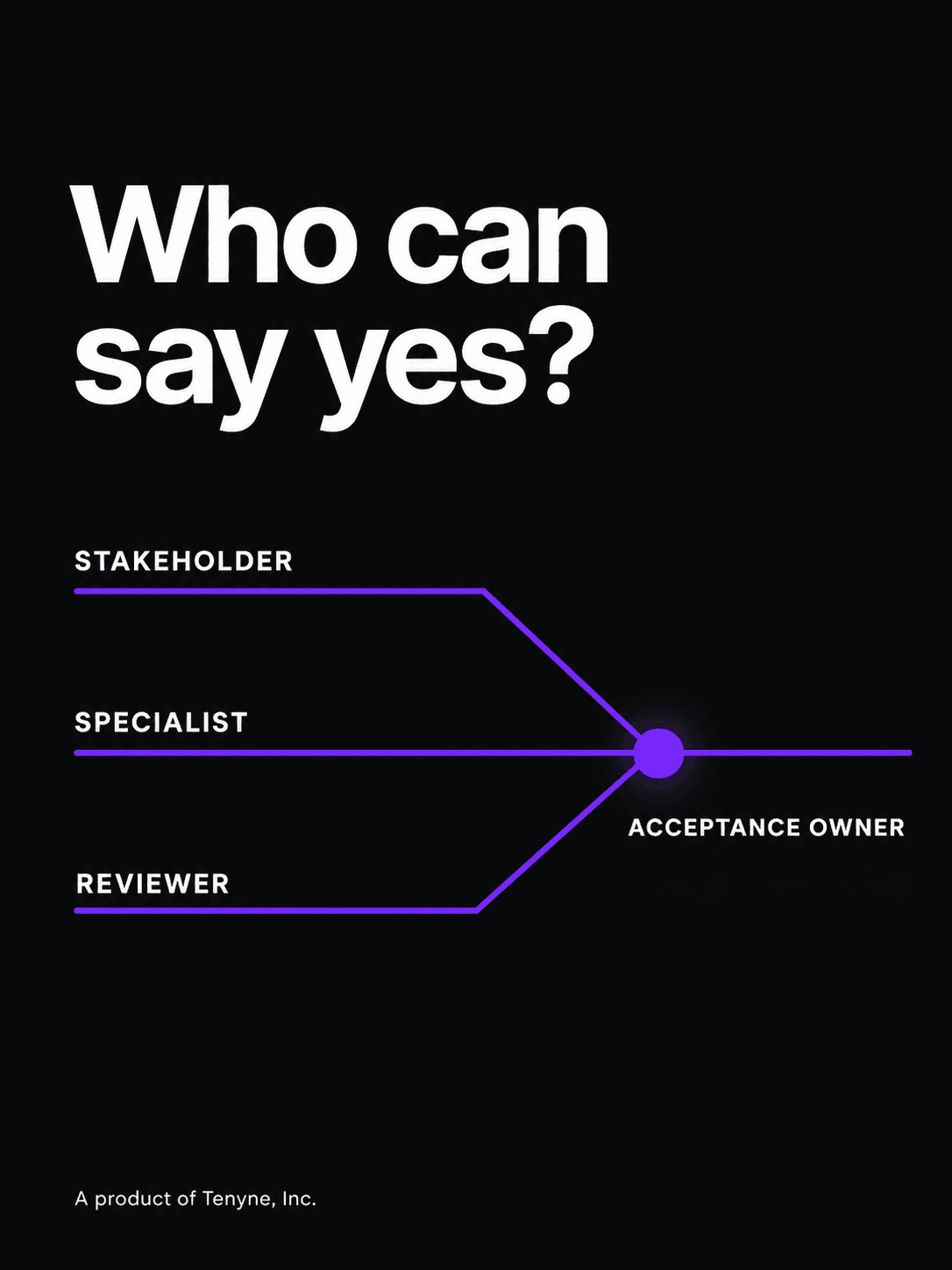
A good acceptance criteria process also includes a defined review window — typically five business days is standard within which the client accepts or raises specific issues. If there is no response within that window, the milestone is treated as accepted. This protects both parties: the client has time to review properly, and the vendor is not left waiting indefinitely for sign-off that never comes.
3. Code ownership
Under US, UK, and Canadian copyright law, code written by an independent contractor belongs to the contractor by default , not the client who paid for it. This is not a loophole. It is the default legal position. Most founders do not know it until they try to enforce ownership and discover the contract does not contain an explicit assignment clause.
Code ownership in an accountable engagement is not assumed. It is written. The contract should contain an express assignment of all intellectual property — code, documentation, models, derivative works to the client, effective from the date of creation, not from project completion.
A vendor who resists this language is not a vendor you want building something your business depends on. The resistance is the signal.
Full IP assignment before work starts is not a negotiating position. It is a baseline. Any engagement that does not include it is structurally exposed in a way that no amount of relationship trust can fix.
4. Dispute and non-delivery process
What happens if a milestone is not delivered? What happens if the deliverable is rejected? What is the remediation period? What are the client's options if remediation fails?
These are not hypothetical questions. They are the questions that determine whether accountability in your engagement has any teeth or whether it is a value statement with no mechanism behind it.
A well-structured engagement answers all four questions explicitly in the contract before work starts. The remediation period is defined. The client's right to withhold payment pending remediation is defined. The escalation path is defined. The refund conditions are defined.
Ambiguity here is not neutral. It is a structural advantage for the vendor. Every unclear term is a term that resolves in a dispute and disputes, at seed stage, cost time and money you do not have.
The Red Flags That Appear Before the Contract Is Signed
Most engagement failures have visible warning signs in the first 30 days and many have warning signs before the contract is signed. The founders who avoid bad outsourcing experiences are not the ones who got lucky with good vendors. They are the ones who knew what to look for before they signed anything.
A vendor who can scope your project in under three days of conversation has not scoped your project. They have accepted your framing of it. Good vendors treat discovery as the highest-risk phase of the engagement because it is. A rushed scoping process is a signal that the vendor prioritises deal closure over delivery quality.
A vendor who agrees with everything you say without pushing back is not an expert partner. They are a task-taker. Expert partners ask hard questions about requirements, challenge assumptions about scope, and flag risks before they become problems. A vendor who tells you everything is straightforward at the proposal stage is either inexperienced or telling you what you want to hear.
A vendor who cannot name the person who will own delivery is a vendor whose accountability structure is unclear before work has even started. You should be able to speak with the named delivery lead before signing — not "someone from engineering" and not "a senior person will be assigned after kickoff." The person who will own the trade-offs, the escalation decisions, and the milestone sign-offs should be identifiable and accessible before the contract is executed.
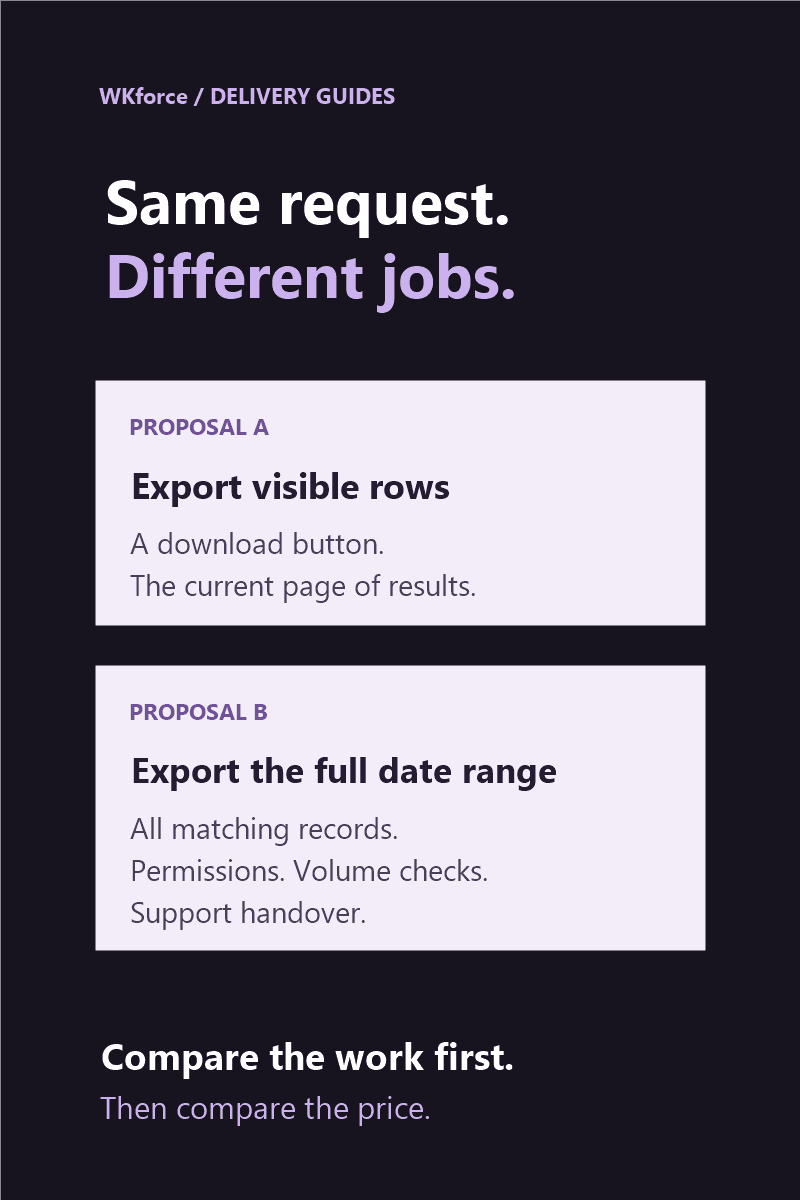
A proposal with no milestone breakdown is a proposal for a time-and-materials engagement with deliverable language attached. If the vendor cannot produce a milestone-by-milestone breakdown of the work before signing, the engagement does not have an accountability structure. It has a billing structure.
What Accountable Delivery Actually Looks Like in Practice
An accountable outsourced engagement has the following characteristics from day one:
The scope is jointly defined in a discovery session that produces a written milestone breakdown both parties have reviewed and agreed on. Not a brief from the client and a yes from the vendor. A joint output.
Each milestone has written acceptance criteria specifying what the client will verify, how, and within what timeframe. The criteria were agreed on before work started.
The contract contains an express IP assignment covering all work product, effective from the date of creation. The vendor signed it before a single requirement was shared.
Payment is tied to milestone acceptance, not to time or progress. The vendor gets paid when the client accepts the deliverable against the agreed criteria not before.
The contract specifies what happens if a milestone is not delivered, what the remediation period is, what the client's options are if remediation fails, and under what conditions a refund applies.
The client knows who owns delivery on the contractor side by name, by role, and by direct contact before the engagement starts.
None of these things are difficult to implement. They are all, however, easy to skip , especially when a vendor has good energy, a strong portfolio, and a proposal that arrived quickly. Speed of proposal is not a signal of delivery quality. Governance structure is.
The Question to Ask Before You Sign Anything
Not: does this vendor have good reviews?
Not: does this vendor have experience in my stack?
But: if the milestone we agreed on is not delivered on time and to spec ,what exactly happens next, and where is that written?
If the answer to that question is not in the contract, the engagement is not structured for accountability. It is structured for hope. And hope, in outsourced software delivery, has a well-documented track record.
Before you evaluate a vendor against this framework, see the full definition of what a managed delivery team looks like and how it compares to the standard outsourcing models. [See the full model comparison →]
And if you want to understand how milestone-based payment operationalises accountability in every engagement — not just in principle, but in practice — [here is how the payment structure works in full →]