

Every seed-stage founder has tried at least one of these models. Most have tried all three. Almost none of them would do it the same way again. Here is what each model actually costs, where each one breaks down, and how to know which one fits before you commit.
Freelancer vs Contractor vs Dev Agency: What's the Right Model for a Seed-Stage Startup?
There are three ways to get engineering work done without hiring full-time. Every seed-stage founder has tried at least one of them. Most have tried all three. Almost none of them would do it the same way again.
That is not because the models are broken. It is because founders pick the wrong one for the wrong situation and by the time they realise it, they have already spent the money, missed the milestone, and started the conversation about what to try next.
This article will not tell you which model is best. It will tell you which one fits where you actually are and it will do it with enough specificity that you can make the decision in under five minutes at the end.
What you are actually choosing between
Most founders frame this as a cost comparison.
- Freelancer: cheap.
- Contractor: mid.
- Agency: expensive.
- Full-time: too much.
That framing is wrong, and it is the reason most of these decisions go badly.
What you are actually choosing between is three different accountability structures. Each model puts the ownership of scope, quality, and delivery in a different place. The cost is secondary. The accountability structure is everything — because it determines what happens when something goes wrong, and something always goes wrong.
The freelancer
What it actually is: a single independent developer you hire hourly or per project to execute a defined task. You own everything else. The brief. The project management. The review cycle. The decision about when it is done.
The rate looks attractive. Senior software engineers charge between $75 and $120 per hour on the freelance market in 2026, with the average sitting around $101 per hour based on current market data. At 160 hours a month, that is $12,000 to $19,200 a fraction of the loaded cost of a full-time hire. No equity. No benefits. No long-term commitment.
The hidden cost is the management layer you are now responsible for. Every hour a freelancer spends waiting for a decision, a brief, or a review is an hour on your invoice. At $100 per hour, a single week of unclear direction costs $4,000. A misaligned month costs more than a recruiting fee.
The failure mode is not the freelancer. It is the founder who hires one to avoid the overhead of managing an employee and discovers that managing a freelancer well requires more active oversight, more precise communication, and more technical context than managing someone on your team. A freelancer who needs constant oversight can slow down an entire roadmap. One who works independently and ships production-ready code can save you more than the rate difference.
The right use case is narrow: a well-scoped, bounded task with a clear output, a clear deadline, and a founder or CTO who has the time and technical depth to review the work in real time. Remove any one of those conditions and the model starts working against you.
The question to ask before hiring a freelancer: Who is writing the brief, reviewing the output, and making the call on whether the work is done and do they have the bandwidth to do that well for the next 30 to 60 days?
The contractor
What it actually is: a step up in formality and commitment from a freelancer. An independent contractor typically engages for a defined period — three to six months — on a statement of work. Still self-employed. Still no benefits or payroll taxes on your end. But the relationship is closer to a team member than a task-based hire.
The cost sits between a freelancer and an agency. Senior contractors in the US charge between $90 and $160 per hour in 2026. On a six-month engagement at 160 hours per month, a mid-range contractor costs north of $110,000 before any management overhead, rework, or knowledge transfer costs.
The failure mode is dependency. A contractor who performs well becomes load-bearing faster than most founders expect. They understand the codebase. They made the architecture decisions. They know where the technical debt is buried and why. When the engagement ends or when they take a better offer that knowledge leaves with them. There is no institutional memory. There is no handoff protocol. There is a codebase that only one person fully understood, and that person is gone.
The model works when there is a technical founder or CTO who is absorbing context in real time and can maintain continuity when the engagement ends. Without that, you are building on a foundation with an expiry date you do not control.
The question to ask before hiring a contractor: When this person's engagement ends, who carries the technical knowledge forward and are they in the building right now?
The dev agency
What it actually is: a firm that provides a team , typically a project manager, one or more developers, sometimes a designer or QA resource under a contract that specifies deliverables, timelines, and costs. You are buying the output, not the hours. In theory.
In 2026, fixed-scope engagements with US-based agencies typically start at $30,000 for simple builds and run significantly higher for standard SaaS products or anything with meaningful complexity. Offshore and nearshore options bring costs down but introduce coordination overhead and timezone friction that founders consistently underestimate.
The appeal is real. An agency owns the project management. You define the outcome, they define the path, you review the milestones. You are not running standups or writing briefs. For a founder without a technical co-founder, that sounds like a solution.
The failure mode is misaligned incentives. A time-and-materials agency earns more when projects run longer. A fixed-price agency protects margin by scoping conservatively and charging for every deviation. Neither structure is naturally aligned with what you need: working code shipped on a timeline that matters to your business. According to the Standish Group's 2024 CHAOS Report, 40% of software projects fail to deliver on their original objectives. The leading causes are unclear requirements, scope creep, and inadequate planning — all three of which the standard agency model makes worse, not better.
The agency also adds a communication layer between you and the people building. The brief gets interpreted twice before anyone writes a line of code. And once a project is underway, changing scope is expensive, ending the contract early costs you, and the agency has leverage a freelancer or contractor does not.
The question to ask before hiring an agency: Is the scope defined precisely enough that neither party has an incentive to reinterpret it and what happens contractually if the milestone is not delivered?
The pattern underneath all three
Look at the failure modes again.
The freelancer fails when the founder cannot provide clear scope and active oversight.
The contractor fails when there is no technical lead to absorb institutional knowledge before the engagement ends.
The agency fails when incentives are misaligned and scope drifts.
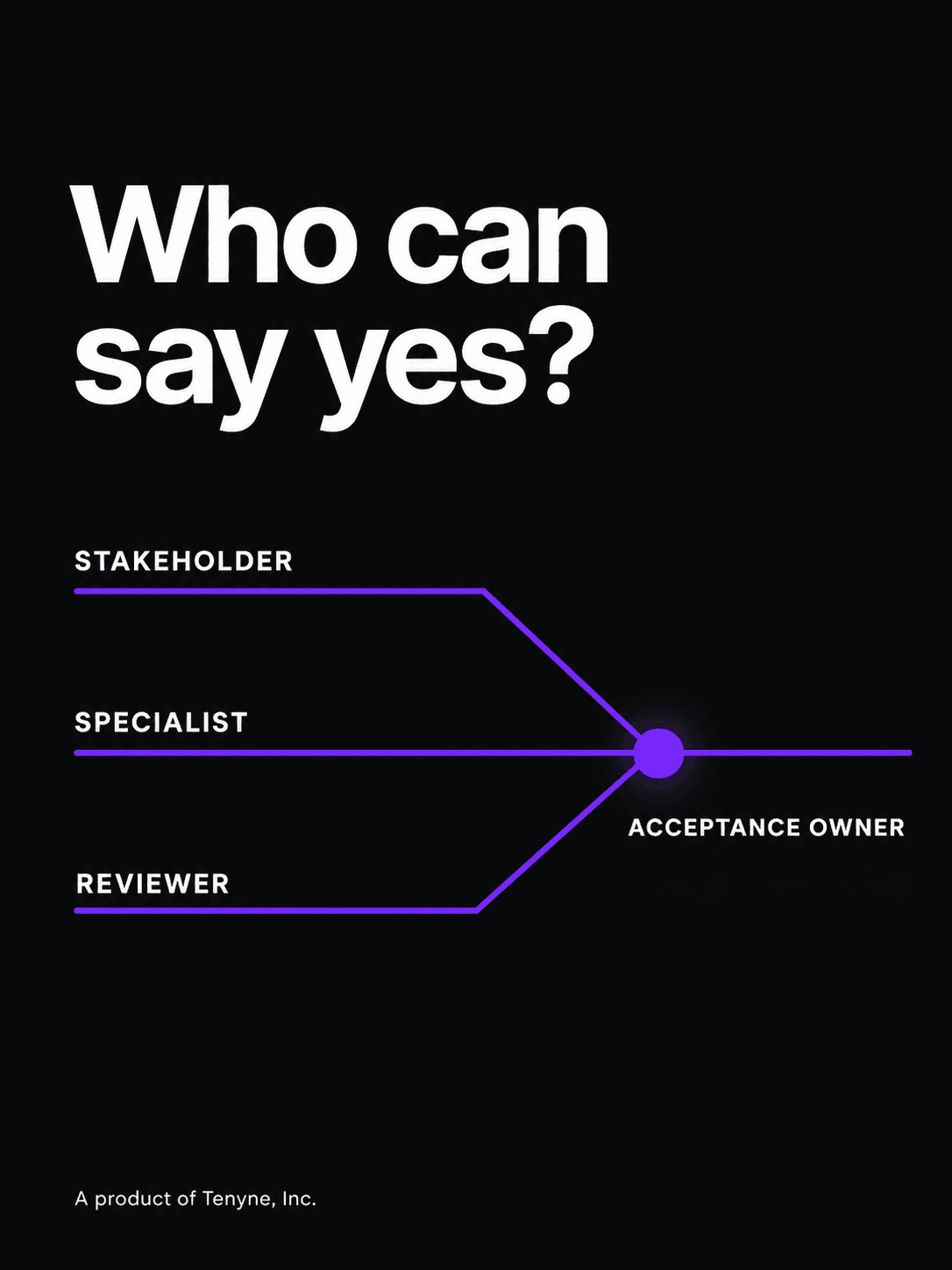
All three trace back to the same root problem: no structural guarantee that a specific thing ships by a date that matters and no clear answer to the question of who is professionally accountable if it does not.
The model is not the problem. The absence of governed delivery is the problem. And none of the three standard models solve it by default.
The fourth model most founders do not know exists
There is a delivery model that sits between a dev agency and a managed team. It is not a freelancer platform. It is not staff augmentation. It is a governed delivery engagement , a structured model where a managed team ships against a defined milestone, payment is tied to delivery, and accountability is built into the contract rather than assumed from the relationship.
The key differences from the three models above:
Scope is defined before work begins — jointly, in a scoping session that produces a milestone both parties can verify. Not a vague brief. A specific, shippable output.
Payment is milestone-based. You pay for shipped, accepted work. Not hours. Not days. Not progress. The milestone. If it is not delivered, the terms protect you.
The code is yours. Full IP assignment, built into every engagement. No dependency on a single contractor who takes the institutional knowledge when they leave.
The team is managed. You are not running standups. You are not writing briefs. You are reviewing output against the milestone you agreed on before work started.
For a seed-stage startup with a specific milestone to hit before a fundraise, this structure solves the problem all three standard models leave open: the gap between paying for engineering capacity and actually receiving engineering output.
Before you decide which model fits your situation, see what the full loaded cost looks like across all the options. [See the full cost breakdown →]
And if you want to understand what a governed delivery engagement looks like in practice — the sprint structure, the milestone framework, the payment model — [here is what the model looks like in detail →]
The five-minute decision framework
Answer these five questions. They will tell you which model fits where you are right now.
1. Can you define the output in a single sentence? If yes — a freelancer or contractor may work. If no — you need a scoping process before you engage anyone.
2. Do you have a technical founder or CTO who can review and absorb the work daily? If yes — a freelancer or contractor is manageable. If no — you need a model where project management is owned by the vendor, not by you.
3. Is the work bounded — a specific feature, integration, or milestone — or is it open-ended? If bounded — a sprint-based model gives you the most control and the least long-term commitment. If open-ended — a contractor retainer or managed team engagement makes more sense.
4. Does your timeline allow 45 to 90 days for sourcing and three to six months for ramp-up? If yes — a full-time hire is back on the table. If no — every model in this article beats a full-time hire on time to first output.
5. Can you afford for the work not to ship on time? If the milestone is optional — any model works. If the milestone is what your Series A depends on — you need a model where accountability is structural, not assumed.
The right model is not the cheapest one. It is not the most familiar one. It is the one that matches the scope of your work, the bandwidth of your team, and the consequence of the work not shipping when it needs to.